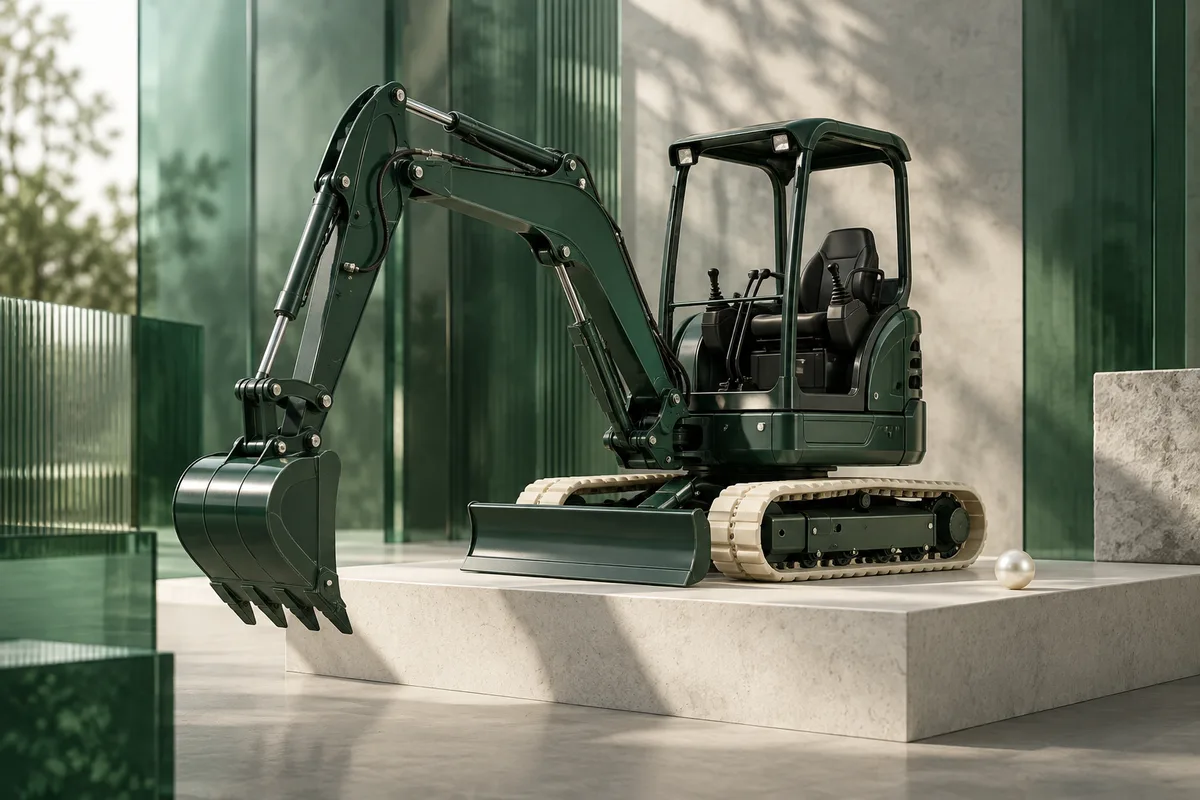
A heavy-equipment lease commits the business to more than a payment. The machine has to suit the work, arrive when needed, and remain economical during maintenance, weather delays, and quieter periods. An attractive quote is not enough if the agreement does not fit how the equipment will be used.
Start with the operating requirement, then compare leasing with renting, buying, or financing a purchase. The decision should follow the expected workload and contract terms rather than a claim that one method is always cheaper.
Specify the job before comparing quotes
Write down the required capacity, attachments, site conditions, transport needs, and expected operating hours. Ask the people who will use and maintain the machine to review the specification. A lower-priced unit is not a saving if it cannot complete the contracted work.
Separate confirmed jobs from bids and potential projects. Estimate use for both a normal schedule and a weaker schedule. Include the time spent transporting the machine, waiting for permits, or standing idle between jobs.
For used equipment, request service history, an inspection, and clear condition records. Confirm which serial-numbered asset and attachments the quote covers before comparing two offers.
Compare acquisition paths over the same period
The SBA’s equipment guidance discusses buying and leasing as alternatives with different cash demands and contractual responsibilities. It highlights that maintenance, purchase options, and early termination require attention. Those details should be checked in the actual offer.
Build a worksheet for the period you expect to need the machine:
| Cost or obligation | Question to resolve |
|---|---|
| Initial cash | What deposits, delivery costs, taxes, or advance payments are due? |
| Recurring payment | When does billing begin, and what happens during downtime? |
| Operating cost | Who pays for fuel, insurance, maintenance, and repairs? |
| Usage limits | Are hours, geography, attachments, or operating conditions restricted? |
| End of term | Must you return, renew, or purchase, and on what terms? |
| Exit cost | What would ending the agreement early actually cost? |
Keep uncertain amounts visible. Do not enter zero for a cost merely because it was omitted from a sales summary.
Read the maintenance and downtime provisions
Ask who schedules maintenance, which service providers are permitted, and which records must be retained. Identify responsibilities for ordinary wear, accidental damage, transport damage, and major component failure.
If a replacement machine is promised, ask what qualifies for one and how quickly the supplier is contractually required to provide it. If no replacement is included, budget the practical alternative: a temporary rental, subcontracted work, or a delayed job.
Compare those obligations with your customer contracts. For example, a machine payment may continue while a construction project is delayed. The customer’s timing does not automatically change the financing obligation.
Understand the last payment as well as the first
Request the exact end-of-term provisions. Is a purchase option a fixed amount or a price determined later? Is advance notice required to return the equipment? Who pays return freight, inspection, restoration, and missing-attachment charges?
Set calendar reminders for notice deadlines as soon as an agreement is signed. Keep delivery photographs and condition records with the lease so that return discussions have a documented starting point.
If you expect to own the machine eventually, compare the full path to ownership with a purchase-financing quote. Include the final purchase amount rather than comparing only periodic payments.
Have accounting and tax treatment reviewed separately
Do not select a lease based on an assumed immediate tax write-off or a promise that it stays off the balance sheet. The agreement and applicable accounting and tax rules need their own review.
IRS Publication 946 discusses ownership and leased property in determining depreciation treatment. That is a reason to have an accountant assess the actual transaction, not to infer that every equipment arrangement receives the same deduction. Ask for the cash comparison before tax effects and the adviser-reviewed version after them.
Prepare an equipment discussion that can be evaluated
Bring the machine specification, supplier quotation, expected utilization, and an operating budget that includes a quieter period. Identify the amount of cash the business can contribute without leaving payroll or existing jobs short.
Pearl’s equipment financing information can help frame a business-purpose inquiry. Product availability, asset eligibility, costs, security requirements, and timing depend on the provider and agreement. Financing does not guarantee equipment performance or future work.